Posts

History of Rolls Royce- Lets become a team?- http://www.autosmithcar.com/

Image
The company’s automobile division was operating quite successfully, but the motors division began suffering. In 1998, Vickers decided to sell Rolls-Royce Motors. BMW made an offer of £340m, but it was outbid by the Volkswagen Group, which bid £430m. As part of the deal, Volkswagen gained complete control of Rolls-Royce and its Crewe factory. However, since Volkswagen didn’t have the rights to build cars under the Rolls-Royce name, the situation later skewed towards BMW and after many negotiation meetings, both companies finally arrived at a solution. Therefore, the Rolls-Royce Motor Car Limited was founded and by 2003, BMW was able to name its cars ‘Rolls-Royce” and the former Bentley/Rolls-Royce division came under Volkswagen’s control. A year later, Rolls-Royce reintroduced the Phantom, which was the first model from the Rolls-Royce Motor Cars Limited. By 2008, the Phantom Drophead Coupe was also introduced and released numerous famous models, including the Wraith, Ghost, and Si...

History of Rolls Royce- The Ghost brought Wraith- http://www.autosmithcar.com/

Image
From 2010 –  Ghost  4-door sedan. Rolls-Royce announced in September 2006 that it would develop a new four-door model named Ghost. The Ghost will be smaller than the previous Rolls-Royce automobile launched, the Phantom. Only 20% of the components would be sourced from BMW F01 7 Series, and it will be positioned below the Phantom. [4] On 4 March 2014, the new Ghost Series II was revealed to the public at the Geneva Motor Show. [5]  It has a facelift front with new LED headlights. The interior has had an update as well. From 2013 –  Rolls-Royce Wraith  coupé. Rolls-Royce Motor Cars launched a new car at the  Geneva Motor Show  on 5 March 2013. [6]  The new car, named the Rolls-Royce Wraith (in honour of the original  Wraith  built by the original  Rolls-Royce Limited  from 1938 to 1939) was a luxury coupe, with a long bonnet and a sleek roof line, and was a coupe version of the  Ghost . It was powered by a 623 ...

History of Rolls Royce- Up and Down- http://www.autosmithcar.com/

Image
The 1970s was a challenging decade for  Rolls-Royce  but, following re-launch as two separate companies, the decade saw the arrival of two exciting new motor cars. Under  Rolls-Royce  Motors Limited, the stylish two-door Corniche was created. Based on Silver Shadow, it was hand-built by Mulliner Park Ward. Available as either a hardtop or a convertible, just 1,306 of them were built. The Camargue, also by Mulliner Park Ward, was coach-built on a Silver Shadow platform with styling by iconic Italian coachbuilder, Pininfarina. The first  Rolls-Royce  designed to metric dimensions, it offered advanced features such as automatic split-level air conditioning. Silver Shadow II was further enhanced with wrap-around black bumpers, an air dam below the front part of the motor car, and improved handling.

History of Rolls Royce- We Want to Rock! http://www.autosmithcar.com/

Image
By the time the Swinging Sixties began,  Rolls-Royce  had begun to appeal to a new breed of owner. Actors, rock stars and celebrities chose the marque as a symbol of their success. Rolls-Royce  also graced cinema screens. Sharing the limelight with Omar Sharif, Ingrid Bergman and Rex Harrison, a Barker-bodied Phantom II featured in the 1965 film,  The Yellow Rolls-Royce . In the same year, John Lennon bought a Phantom V. Leaving the factory with a plain white finish, Lennon had it repainted in matt black before opting for an outlandish, colourful design instead. Now, it’s one of the most valuable items of pop memorabilia ever.

History of Rolls Royce- No car, take the TRAIN!- http://www.autosmithcar.com/

Image
Luxury cars did not fit with the new mood of postwar austerity. After starting design and development of what became their C series diesel engine range in 1948 Rolls-Royce began to produce  diesel engines  in 1951. By 1955 it provided diesel engines for automotive, railway, industrial, earth-moving and marine use. [3] Sentinel (Shrewsbury) Limited  was bought in 1956. Sentinel made machine tools and industrial locomotives. Rolls-Royce took over Sentinel's  Shrewsbury  factory for diesel engine production and all its diesel work was transferred there. [3] West Riding  manufacturer of diesel shunting locomotives,  Thomas Hill (Rotherham) Limited , was added to the group in 1963. [3] In 1973 when Shrewsbury activities were put under the umbrella of new owner, Rolls-Royce Motors, the range of diesel engines included: C range: 4, 6 and 8 cylinder engines with power output from 100 to 450 bhp. Used in generating sets, compressors etc., construction ...

History of Rolls Royce- For the Princess!- http://www.autosmithcar.com/

Image
The 1950s marked the start of a long-standing relationship between  Rolls-Royce  and the royal family. Replacing Daimler as the preferred motor car supplier to the British monarchy, Her Royal Highness Princess Elizabeth took delivery of the first Phantom IV in 1950. Designed exclusively for royalty and heads of state, Phantom IV is one of the rarest  Rolls-Royce  motor cars in the world, with only 18 ever built. The introduction of Silver Cloud came in 1955. Designed by JP Blatchley and capable of a top speed of 106 mph, it featured the same 4,887cc engine as Silver Dawn but with a completely new and handsome steel body.  By the end of the 1950s, Phantom V had arrived. Powered by a V8 engine and featuring a coach-built body, it was a huge success. Luxury and Royalty does kind of sum up Rolls Royce...

History of Rolls Royce- "Arm Yourselves!" - autosmithcar.com

Image
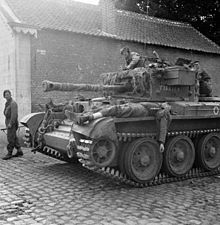
In 1940 a contract was signed with the  Packard Motor Car Company  in Detroit, Michigan, for the production of Merlin aero engines in the USA. Production focussed on aero engines but a variant of the Merlin engine, known as the  Meteor , was developed for the  Cromwell tank . The Meteor's development completed in 1943 the same team at the Belper foundry restarted work on an eight-cylinder car engine widening its uses and it became the pattern for the British Army's  B range of petrol engines  for post war combat vehicles [3]  in particular in  Alvis 's  FV600  range, [nb 2]   Daimler 's  Ferret ,  Humber 's  Hornet  and  Pig  and  Austin 's  Champ . A time when all car companies worked together and not against each other.  No bitter rivalry between companies, no smear campaigns just working men and woman working for the same thing.